Monday, 25 April 2011

Reputation agendas and research

Came across the Ipsos-Mori Reputation Research Council which includes the views of 38 Directors of PR and Communications for leading UK companies primarily.   The latest survey and feedback from members is included.  Data suggests that a low priority is given to EU elected and departmental officials (p.25) in terms of both who the CEO listens to and as a stakeholder group which the organisations regards as important in terms of  "licence to operate".  This is surprising for such large companies and I wonder if it would be echoed with a more pan-European communications network?

While I hope to attend the Oxford University Said Business School's Reputation Symposium later this summer. Some interesting working papers with PR relevance are also available on the site or via the author.


Saturday, 2 April 2011

Facebook - might they introduce a corporate community charge?

A recent piece in the Financial Times about a visit to Facebook's headquarters by leading figures from the advertising industry got me thinking about the potential valuation figures for the company when it floats next year as most commentators predict.   I think that the valuation figures being quoted from $75-100bn are probably feasible based on its size and potential but I do not see advertising as we know it, being the driver of revenue, in fact just the opposite.  Facebook is not about transactional relationships but communal or social relationships and although this may be changing on the edges, I don't think at its core it is changing.  However there are other commercial opportunities.

 One of the students at Greenwich was showing me recently some of the brands she follows on Facebook including the fashion magazine Glamour which has over 20,000 followers or friends.  Having looked at some of the UK retail brands such as M&S which has over 250,000 and it is clear that a growing number of businesses are understanding how to develop active and relevant communities on Facebook which support their other online and offline activities.

But this brings no money into Facebook - as far as I can see.  However, as a guess I would have said that the active community on Facebook for Glamour magazine must be worth at least £10k a month to Glamour magazine, maybe more (50p per user per month?).   I cannot see any reason why Glamour magazine would want to advertise on Facebook, when it already has such an active community which will spread by word of mouth and through the magazine and web site.  What must the M&S site be worth to Marks & Spencer with a much larger community?

However, in the future, might Facebook look to impose a community or poll tax when a corporate community has reached a critical mass of members say over 15,000/20,000 but could be smaller depending on size of  organisation.  Facebook might select to charge only for commercial organisations not NGOs or charities but potentially could be a significant source of revenue and I doubt that Facebook would lose many brands as a result.  I think this is a possibility as one of the very clever approaches which Facebook has followed from the start is building the size of the network before it seeks to commercialise.   Let more and more companies see the benefit of belonging to Facebook and then introduce a corporate community tax when they are on the hook and feel commercially they cannot withdraw.

In this scenario, Facebook can be seen as the owner of a very desirable shopping centre which charges a commercial rent for organisations to have a shop front in the world's largest social network.  The benefit of this potential approach is it would not impact on the social relationships at the core of the Facebook model which earlier attempts based on conventional advertising have done before being withdrawn. 


Sunday, 27 March 2011

Lobbying and government relations in the public sphere

The University of Greenwich is part of an Erasmus Intensive Programme (IP) submission providing Masters students in PR and communications the opportunity to research and study government relations and public lobbying in the European public sphere over an intensive two week period.  If successful and the decision will be known in the summer from the EU, then Masters students from Greenwich and six other European universities running Masters programmes in public relations/communications will be participating in a joint programme based in Louvain, Gent and Brussels for two weeks in March 2012.  The programme along with a programme of lectures and seminars includes visits and workshops with industry/NGO and EU participation  across a range of current lobbying and government relations agendas.  The programme will be repeated in 2013 and 2014.   It will be the first ever Erasmus IP with a public relations focus.

                             European Commission, Brussels. (Photo courtesy of: Financial Regulation.)

 The programme will be exploring issues around public diplomacy, agenda setting in publiic, legitimacy and transparency in lobbying and government relations based on a public sphere model of practice. Traditionally lobbying and government relations has been seen (and is to varying degrees in practice) an activity taking place behind closed doors.  The EU, as its White Paper on communications (2006) highlights, is moving towards a public sphere model of communications, supported by growing transparency legislation, and the influence of social media, so this tension at the heart of lobbying and government relations in the EU makes the relevance of this programme proposal strongly.  Recent coverage of MEPs resigning over payments for lobbying further strengthens the case for the Erasmus IP programme and for greater research and consideration of practices in the sector.

The programme is being led by the Catholic University of Louvain in Belgium with strong support from the Artevelde University College of Ghent. The other universities involved include: University of Nancy 2 in France; University of Bucharest in Romania; University Cardinal Herrera in Valencia, Spain; INP in Lisbon, Portugal; and University of Greenwich, London, UK.   The Erasmus IP proposal is a tribute to the hard work of the MARPE network of PR universities and in particular Anne-Marie Cotton at Artevelde University College Ghent.


Thursday, 24 March 2011

PR currently lacks role in MBA curriculum - "a notable omission"

An important initiative from the PR Society of America - getting PR in general and in particular reputation management and corporate communications onto the MBA timetable as a recemt comment piece in the FT highlights.   As PR has now got into the boardroom as a strategic management function surely it must be only time before it becomes part of the MBA curriculum?  However, has PR yet got enough influence or academic credibility within the great business schools to effect this change?

                                          Harvard Business School - birthplace of MBA.

I am not sure.  For example, the Said Business School at Oxford which has a Centre for Corporate Reputation shows no apparent interest in PR's contribution to the subject when I last looked.  Certainly when PR does get onto the MBA curriculum does it will be an important milestone on the professionalisation of PR. 

Wednesday, 29 December 2010

Michael Porter sets agenda for 2011

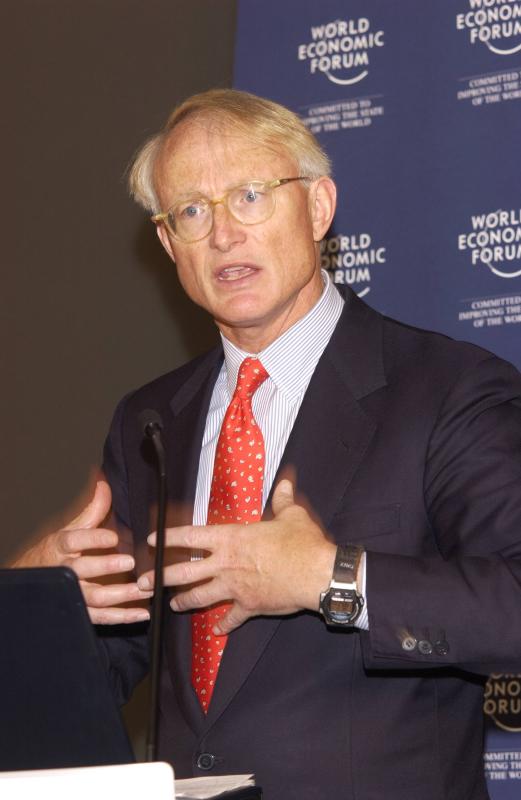
Sure to be a must-read piece for those involved in corporate communications, financial PR, corporate governance and public affairs, is an article by Professor Michael Porter and colleague Mark Kramer in this month's Harvard Business Review.  Famous for his work on competitive forces and industrial clusters, Porter is damning on business, short termism and failure to put society or "shared value" at the heart of its business activites.
 Michael Porter.
"The capitalist system is under siege. In recent years business increasingly has been viewed as a major cause of social, environmental, and economic problems. Companies are widely perceived to be prospering at the expense of the broader community."  A major theme of the article is the concept of "shared value" which the authors say is not CSR or philanthropy but "reconnecting business with social progress."

Coming from the pen of such a leading figure in business strategy, and in a leading business publication, the article is sure to put more focus on the stakeholder/shareholder debate; and also the more modern framing of the argument around concepts such as sustainability and the need for organisations to think about and implement such concepts in a more fundamental way.

Wednesday, 15 December 2010

Is Rolls-Royce too wedded to key stakeholder relationships?

Following Rolls-Royce's handling of communications as a result of the major engine problems on the new giant Airbus has been instructive if somewhat painful from a UK PR plc perspective.  No wonder, that according to PR Week's latest edition, it is in discussions with leading consultancies on getting some additional help. One or two of the media have even linked it to BP in terms of a major UK brand not understanding the new rules particularly in a crisis PR situation.
(Image: Wing damage to Rolls-Royce powered Quantas new generation Airbus A380 which landed safely in Singapore.)

What are the new rules?  Well that is an exaggeration - but I think that social media has enhanced the role of a more generalised public opinion as opposed to a key stakeholder approach which is the approach which Rolls-Royce took in response to the situation.  The trouble with this is that the company decides if a stakeholder community is important and of course it may be that public opinion decides that actually travel safety issues are of a great deal of interest to many of us, not just investors, customers of Rolls-Royce and regulators, something which Lex in the Financial Times pointed out. The response of Quantas, operators of the plane in question, was particularly instructive and showed it understood about the need for a wider communication approach to the incident.

It turns out courtesy of CorporateComms that the Director of Communications at Rolls-Royce does not believe in the impact of social media which seems unfortunate in the context and particuarly so as other media are now developing this aspect of the story.

For those PR practitioners interested in reading more regarding the role of generalised public opinion particuarly in crisis PR situations, there is a very good paper in the academic journal Corporate Communications by Oyvind Ihlen of the University of Oslo.

Wednesday, 1 December 2010

Wikileaks exposes public and private communication dilemmas for organisations

The explosion of coverage about Wikileaks and its exposure of US diplomatic correspondence has raised a whole range of political and foreign policy issues and comments; as well as a wide ranging debate about the role of information, social media and its impact, new forms of media and so on. 

From a PR perspective, I find it interesting that leaders and some media commentors have been so outwardly unsettled about the process as though the way you speak publicly about a country and organisation can be radically different about the way you communicate it in public.  To have such a disconnect, I would suggest is not feasible in a global networked society.

Certainly I think we have the right as citizens to know that the ruler of Saudi Arabia is encouraging the USA to bomb Iran or that China is accepting of the idea that there should be a  unified Korea in due course.  These are important pieces of information that should have been brought out of the private sphere into the public sphere.

Might organisational culture issues also be at work here.  Could the diplomatic service of countries be somewhat traditional in their approach to communications - believing it is acceptable to have two modes of operation - the public sphere mode and the private sphere mode and only in  the latter mode where you are totally "honest" about the country and rulers.  Of course Habermas would have been able to point out that "rational discourse" is a facet of a genuine public sphere something which does not appear to be going on - it all appears to be stored up for the private message to Washington.  In terms of reputation, legitimacy, transparency and relationship management having such a gap between public and private communications raises serious issues for an organisation.  In an networked global environment, traditional communications approaches by the diplomatic service or other large organisations - and banks seem to be next in the Wikileaks crosshairs - are no longer feasible and will need to be re-thought.

It should be noted that the British Foreign Office has created a blogging community on its web site giving views from round the world.    Is it a genuine conversation?  Certainly it is an interesting initiative although a search on the site suggested that nobody was confident enough to talk about Wikileaks which suggests that "rational discourse" is somewhat lacking!