Thursday, 18 February 2010

Manchester United - fighting for organisational legitimacy against citizen power

I am not up in sports PR but it is fascinating to watch the way that Manchester United as an organisation is fighting for its credibility.  Not as a club - only this week it continued to be as successful as ever on the pitch - but its  present ownership structure is rapidly losing credibility in the face of its own fans, wider supporters of football, undoubtedly the sports media as well as the government - all concerned by the high level of debt on its balance sheet.  

It is yet another example - Trafigura was an earlier one - where organisations depend on a "licence to operate" which is not given by the courts or bought in the market but which depends on the way that an organisation engages with its stakeholders and the wider community to earn respect and support. 


It is no longer too far fetched to see that the fans who have no legal power in the ownership of Manchester United as presently structured i.e a private company; may force the Glasers to sell over the next 12/18 months.  Might this be the first Citizens Takeover in a stakeholder age?  Might the concept get an airing in the forthcoming election?

Thursday, 11 February 2010

Financial PR and investor relations in a stakeholder environment?

The growth in interest and prominence of the stakeholder approach to organisations (as highlighted at the recent World Economic Forum), in contrast to a shareholder focus, poses an interesting problem for f inancial PR and in particular investor relations.  How do they adapt to this new environment as both have grown and become highly profitable parts of the PR industry (investor relations would see themselves as a different profession) in an environment where shareholder focus has been dominant?  Will their role change; will they become less powerful and influential within the communications framework of major publicly quoted companines and how will they reconcile the stakeholder agenda? 

Of course it could be argued that stakeholder communications is a fig leaf for organisations in their dealings with society and that shareholders and the requirements of financial markets are going to dominate, whatever organisations say in public.  We can see this in the recent acquisition of Cadburys by Kraft.  The Chairman of Cadbury's was able to say without embarrassment that the board of Cadbury's had done their fiduciary duty to shareholders by selling the company.  Although in a later speech to the Said Business School at Oxford he did highlight his concerns that so many key shareholders by the end were just hedge funds.  .

However, there are more fundamental issues at work which need to be considered.  Both financial PR and in particular investors relations are a product of the "efficient market theory" which is that markets are inherently efficient and the price of an asset fully reflects the information available.  Markets by implication are also ently hungry for information to further improve market pricing and their overall efficiency.  

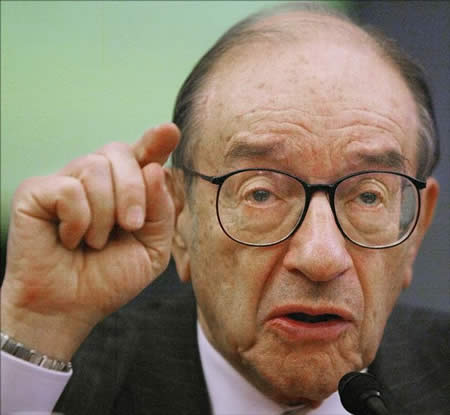
Caption: Alan Greenspan, former Chairman of the Fed and strong supporter of the efficiency of markets. (Google Images).

In this context, the role of both professions can be seen as assisting market professionals in the efficient working of markets by providing information, admittedly from the company's perspective, which have been seen to date to enhance market efficiency.   However, now efficient market theory is badly discredited as a result of the financial crisis, if not before.  The significant asset bubbles in property were not properly priced and a recent piece in the Financial Times shows how badly - with 90% of one of the most toxic form of derivatives, CDOs were issued in 2007, having defaulted.  A clear example of not market efficiency but information asymmetry with buyers understanding a great deal less than sellers about the assets they were buying.

It will be interesting to see how this develops and whether both professions are starting to rethink the implications of the financial crisis.  I have not seen much evidence of a debate going on but would welcome hearing about this if anyone has further information on the subject.  It would be an interesting subject for a one day conference at Greenwich.

In the meantime it is interesting to note that the Walker Review of Corporate Governance, a potentially influential report, published November 2009, by a senior City figure commissioned by the UK Treasury, uses the word "stewardship" in terms of the role of major shareholders.  Now "stewardship" is a term, normally associated with great Estates where they are passed from one generation to another, with no idea of selling the assets which you have inherited.  The same principle can be seen with many family firms, where inter-generational transfer is a key requirement.  Shareholders as stewards - that takes some thinking about and what are the implications for financial PR and investor relations practice?

Saturday, 30 January 2010

Social media and semantic web insights

Last few days there have been a number of major articles and presentations on social media and the internet which look to be a good resource in terms of making sense of it and considering future developments.  The presentations were at the World Economic Forum at Davos and the article is from the Economist.

Two hour workshop on social media at the World Economic Forum with all the main players participating and chaired by Loic Le Meur, a leading French blogger and social media commentator.  First 10 minutes were good and hopefully the rest will be equally good.

Tim Berners Lee on the semantic web and web scale developments.  A good five minutes.

The Economist and social networking.

World Economic Forum has had some very good sessions on social media and this was an excellent one with Chad Hurley, YouTube; Bill Gates and EU Commissioner Viviane Redding (v.good) from 2007.  Still appears to be available on Google Video.  Always good to see what still applies and what was seen as the key development three years ago.

Wednesday, 13 January 2010

Celebrity culture survives waves of ad revenue destruction in USA

 The Guardian highights a fascinating but gruesome picture of US magazine publishing and impact of recession and internet on magazine advertising revenues.  The article draws on annual figures for 2008/9 published by Magazine Publishers of New York.  What amazes me is how much advertising revenue, Time magazine still generates at over $400M in spite of a 13% fall in ad revenue during the year. 

People magazine is the king and queen of the print media - a celebrity magazine - it is just shy of a $1bn ad revenue and still growing!   Its web site is also still growing.  Started in 1974 and apparently a spin-off from Time magazine.  Mass media when successful is a formidable money making machine.


Picture credit

Tuesday, 29 December 2009

Agenda setting by PWC

While browsing, I came across a good example of using social media in an agenda setting role by PriceWaterhouseCoopers'.  As a leading provider of accountancy services globally, it is, I assume, asked to comment on proposed new regulations by financial regulators and other industry bodies worldwide.  This is a well established process by regulators and government civil servants involved in developing regulation in seeking specialist opinion from a wide range of interested parties.  PWC has a section where it publishes its formal responses online (PWC Inform)- a good example of transparency and of course agenda setting by an industry leader in a particular field.  Incidentally a good source on the EU Transparency Directive and relevance for financial reporting and implications for financial PR.

Saturday, 26 December 2009

Google pays no tax in the UK (or as good as) - what impact on reputation in the UK?

The Times has highlighted that Google pays virtually no tax in the UK - even though it earns around £1.6bn from the UK alone; one of its largest country markets.  In addition to paying no tax, Google has through the growth of online advertising related to search, seriously damaged many British local newspapers and put people out of work, with consequent reduction in tax revenues and additional cost of unemployment benefit.


Quite legal, but from my perspective that probably damages its corporate reputation in the UK; particularly as some comments below the article suggest it has made only minimal contribution to UK charities.  If I was the UK government or an MP asked for a meeting by a Google public affairs advisor to discuss some issue which is affecting its business, would I bother?  Doing a quick search on Twitter suggests that it is an issue with a reasonable amount of discussion.

It would be interesting to have a listing of businesses which pay the most tax in the UK.  Certainly contribution to the UK exchequer in the form of tax payments in these days of tightening public sector budgets may enhance and damage some companies' reputations with the public.  Does such a listing exist?  Are companies which pay a lot of tax emphasising this factor strongly enough or is paying too much tax seen as a negative factor with investors?  I suspect organisations are somewhat unsure how to play (even pay) the tax card.

Wednesday, 16 December 2009

Iraq Enquiry end of an era - time for social construction in public enquiries?

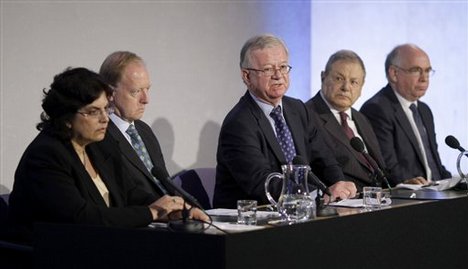
Is the current Iraq Enquiry the last one of its type?


The idea of an Enquiry of the "great and the good" asking polite questions of the "great and the good" with limited aspects of inquisition has surely passed its sell by date.  It is looking somewhat old fashioned and tired. The format has been given a general pasting by the media and the latest incident with the Chairman cutting off TV coverage because some mild comments were made about US intelligence makes the whole process look even more bizarre.  Certainly I don't think any one on the Enquiry is going to have their reputations burnished by this process.  In fact, if one was responsible for PR for the "British Establishment" currently one would be worried - MPs and expenses, the City and financial crisis, the "great and the good" - they all look so tired and unimpressive. 

But is there a different approach?  I think it is time that consideration was given by the authorities to allow people to comment on this and future Enquiry web sites in some form of moderated forum or web comment. Yes, the Enquiry did take views from people initially but why not develop this process further online.    After all Enquiries are a form of seeking out the "truth" and to date they have been a vehicle in all countries generally to allow an "establishment" version of the "truth" to be created.   Now it is surely time and with social media entirely possible, that different versions of the truth can be discussed and aired and people can make their own minds up.  This is the form which online media is moving towards with social media commentary at the end of main articles and blogs.  It is interesting that the BBC has set up a forum site to ask people's opinion on what they want from the Iraq Enquiry. 

In other words a social construction of the "truth" should be part of the agenda of government Public Enquiries and the discussion can take place around each one as well as in the media.   Interestingly both PR and marketing are currently very interested in social construction of brand and reputation as traditional approaches to construction of brand and reputation are seen to be too controlled and lack authenticity.

In fact from an archive perspective, the web site and commentary along with the final report can become part of the permanent record of the Enquiry online.   A decision might be made to allow commentary to continue for a further two months after publication and then it is closed down on that site as representing a full and complete record at that moment in time.  It might be that retrospective comments say at 5, 10 and 20 years on the various sites become a pattern to allow for new thinking and discussion on the subject.

Anybody got a good example of a public enquiry running alongside social media?