Wednesday, 21 November 2012

Blogging and Twitter brings new perspectives on HP and Autonomy

An astonishing amount of information is coming to the surface in the light of HP's remarkable write-off of $8bn of the $11bn purchase price of the British software company Autonomy.  Just following the story today via Twitter and I can see that Twitter combined with blogging has become a major new additional information source for these complex business events where you are trying to understand what is going on and wanting more information than provided by traditional media sources.

This would not have happened five years ago in the corporate sector, I would suggest, and is an important development for the corporate PR sector to consider particularly with personal and organisational reputations at stake.

Some of the detailed insights on Autonomy which I have found include:

Oracle's remarkably aggressive and disparaging press release at the time of HP's purchase of Autonomy.  You have to admire the slides!
* View of Bronte Capital on Autonomy's accounts.
* FT Alphaville news feed last year on Autonomy.
* Jeff Matthews blog on HP's analyst session yesterday.

All of these and other media coverage, of course, feed into the Twitter conversation.

Tuesday, 13 November 2012

Communications and soft power

An interesting example of the growing influence of communications in soft power agendas and roles. A new job advertised at the Home Office which I spotted today in The Times.  Some of the wording is fascinating and the new communications role requires the person to "respond to the ideological challenges of terrorism."  PR as discourse.   A cynic might say that the job's requirement also includes keeping public support for funding for anti-terrorism in the public eye.  

Friday, 2 November 2012

Culture goes mainstream in PR

The Melbourne Mandate, the follow-on vision agenda for PR from the Stockholm Accords places "culture" at the heart of what it calls the "communicative organisation".  This is an important
development for PR as it acknowledges the very real influence that organisational culture has on the communications process alongside the wider cultural context in which the organisation is sited.

The communicative organisation
as envisaged by Melbourne Mandate, 2012.
The Mandate comes at a time when cultural factors are very much to the fore in recent major reports. For example, a report on the Bank of England published today focuses on cultural factors notably a very powerful Governor as a significant factor in its organisational response to financial crisis in 2008. While the culture at the major investment bank, Barclays has also been heavily criticised.

The growing prominence given to culture by the Melbourne Mandate highlights that internal communications is an increasingly influential aspect of corporate communications as the recent European Communications Monitor highlights.

Finally, the adoption of "culture" as a term at the heart of PR practice, also draws on the work of the http://www.sciencedirect.com/science/journal/03638111academic community over the last 15 years with academics such as Sriramesh and Jacquie L'Etang notable in this respect. The latest issue of Public Relations Review looks to be an important primer in this respect.

Monday, 22 October 2012

BBC's corporate communications efforts look very uncertain - why?

I thought I would have a look at the BBC web site to see how they have made their latest announcement  about the editor of Newsnight "stepping aside" regarding the Jimmy Savile programme and enquiry and to see how they are handling it on the web site.   It is rather illuminating and tends to confirm the confused impression which is coming over in the media with senior management uncertain how to handle the situation.

Going to the BBC Media Centre home page and there is no section dedicated to the Jimmy Savile affair with all the information and links currently available accessible from one site.  The latest announcement is the lead story but no overall section.  In a crisis PR situation, this would have helped journalists and public seeking information about the situation and should have been part of the BBC's Corporate Communications approach.  

The official statement is also peculiar as it then links to a statement on the Editors blog pages.  These are where the Editors in the BBC of the leading programmes discuss issues and agendas.  This is a journalistic part of the web site and should not be confused with a corporate communications statement.  This blog entry should be on the Corporate Communications blog section of the BBC web site not the journalistic side.  It does appear that the senior management team at the BBC does not have a blog outlet and that is presumably why it is carried on an editorial section of the web site.  There is yet a further link to the original Peter Rippon blog entry about the reasons for not carrying the Jimmy Savile story on Newsnight.  

All in all a confused picture making it difficult to follow the story and also for the BBC's senior management message to come over. What does appear is that the new DG George Entwhistle looks very uncertain when it comes to media; remember the confidence of Greg Dyke even when he was sacked over the results of the Iraq enquiry.  The senior management team of the BBC need to realise there is a corporate communications aspect to this enquiry which is quite separate from the needs of BBC journalism.  If they don't get a grip of this soon, then I think that one or two senior management will fall and fundamentally over an issue which if handled with more transparency and skill, never needed to have reached this level of media storm.


Friday, 19 October 2012

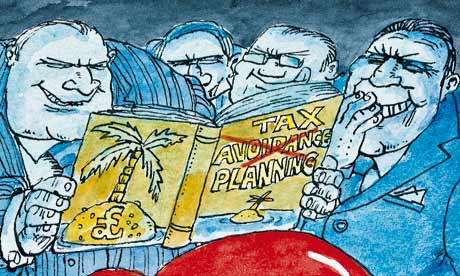
Tax as a reputational issue

The way that the payment of corporation tax has moved from being an minority activist agenda (Vodafone) to a mainstream agenda within a very short space of time is instructive.  Starbucks executives have now been summoned to appear before a Parliamentary committee to explain its non-payment of tax in the UK and the company is facing a developing media campaign, with worryingly for them, the Daily Mail, the voice of "middle Britain" having the company firmly in its sights and referring to a company boycott.

Source: Guardian.
It would be interesting to know when market research organisations such as Ipsos Mori with their reputational surveys of elites widely used by large brands was first starting to spot this as an agenda.  Also whether payment of corporation tax by large brands is a developing global agenda and will appear as an agenda impacting on trust in the Edelman Trust barometer.

Starbucks need to be credited for their transparency on their web site allowing us to read the gathering comments about the CEO of Starbucks UK trying to communicate around the issue.  A rich stream of data for analysis alongside gathering commentaries of users on the Daily Mail and other news sites.

By all accounts from sources in the company, Starbucks has a small PR department and is yet another example of large brands which do not have sufficient feel and insight on developing stakeholder agendas.

It is worth highlighting that new marketing perspectives show a growing appreciation of stakeholder perspectives and non-marketing relationships around the development of the brand particularly with the influence of social media.  The doctoral work of a colleague Dr Jon Wilson is in this very area.  This is an area of growing focus and expertise for a number of us at Greenwich with overlapping interests around PR and marketing in this sphere.  However the evidence from major brands (Google, Apple, Starbucks) is that practice is lagging behind theory in this respect.


Wednesday, 20 June 2012

Visit to Department of Communities

Took a party of MA PR students to the Department of Communities communications department last Friday.  A great overview of government and departmental communications from George Eykyn, Director of Communications and his team, including presentations on several social marketing/public information programmes and a tour of the media office.

The visit included an overview on clearly one of the government's major online projects, Gov.UK "the best way to get to government services and information."   Currently in Beta this starts to be rolled out this Autumn and Communities is one of the pioneering government departments.  It is using open source software so allowing a range of organisations and users to contribute to its development and access to the site is essentially driven by search.   It would appear to be drawing on influences of the symantic web as it is allowing users to access a significant number of different databases - both local and national - to present information in a clear and straightforward way to users.   In design and concept a very interesting and innovative project which is apparently attracting interest from other countries.

I came away from the visit very impressed.  The coherence of the online strategy was unexpected and this may well reflect the influence of Martha Lane Fox as the UK's digital champion.  A real sense that there is some very good strategic thinking in government communications going on behind the scenes (influence of Phillis report and Prof.Anne Gregory?).  What was also surprising and good to see, was the traditions of "impartial" public information communications still survive - I thought that had disappeared with Alistair Campbell's time as government communications supremo and the general politicisation of the communications function.  However, the model adopted is that departmental communications attempt to be politically neutral with political elements added by the special advisors on behalf of the Minister such as for a speech but if the speech goes on the departmental web site then all the political comments are deleted.  A form of Chinese communications wall?  UK government communications has always had a very strong reputation in international PR circles and the work in Department of Communities suggests this continues.   


In fact, there are several talks on government communications at the forthcoming University of Bournemouth History of PR conference in July so it will be useful to have a stronger historical perspective on changing practices and international perspectives.  

Tuesday, 8 May 2012

Facebook tries too hard to monetise?

The evidence is surely growing that Facebook is trying too hard to monetise the relationships on the social network as it approaches its IPO and may damage the product.  Sir Martin Sorrell is probably right when he has advised organisations to be cautious about it as an advertising medium  rating it more highly for PR activity.  Are PR consultancies and in-house PR teams leading Facebook activity by organisations and major brands; or are marketing teams heading this up or a third way with major brands developing cross-disciplinary teams including customer service?